fischer Schwerlastanker sichern Klettergarten Mägdeberg
Befestigen der Extreme

- Home
- fischer Stories
- Referenzen
- fischer Schwerlastanker sichern Klettergarten Mägdeberg


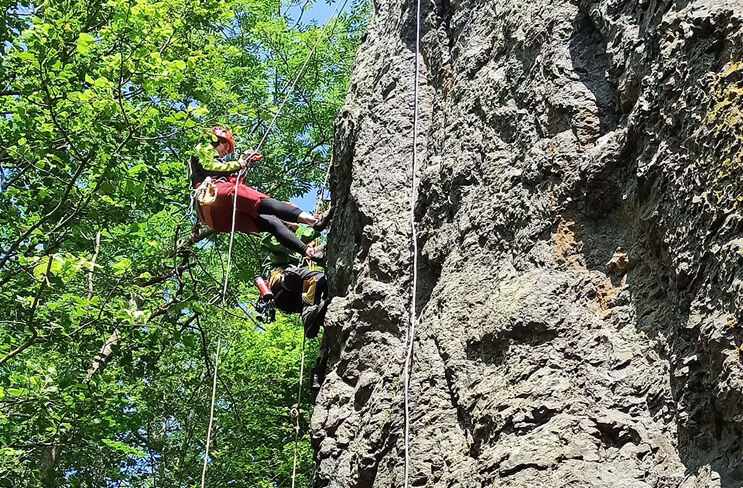
An hohen, teils steilen Bergwänden Bohren und Verankerungen setzen, gehört zu den extremen Aufgaben der Kletterer der Jugend des Deutschen Alpenvereins (JDAV) Konstanz. Im Juni sanierten die Sportler den Klettergarten auf dem Mägdeberg, der sich auf 654,2 m Höhe inmitten der süddeutschen Vulkan- und Ruinenlandschaft Hegau erhebt und einen Ausblick bis in die Schweiz hinein bietet. fischer Schwerlastbefestigungen aus Chemie verankern die Sicherungshaken in den Felswänden.
Neun kegelförmige Vulkan-Relikte ragen bizarr aus dem Hegau, der zwischen dem Schwarzwald, dem Bodensee und der Schwäbischen Alb liegt. Die Region ist außerdem geprägt von Burgruinen, erhaltenen Festungen, ursprünglicher Natur und prominenten Ausflugszielen, wie dem Aachtopf, der größten Quelle Deutschlands, und dem Rheinfall, dem größten Wasserfall Europas. Mitten im Hegau erhebt sich der Mägdeberg bei Singen (Süddeutschland) mit einem Klettergarten, der bereits seit den 1970er-Jahren beklettert wird und kürzlich von der Jugend des Deutschen Alpenvereins (JDAV) Konstanzsaniert wurde.

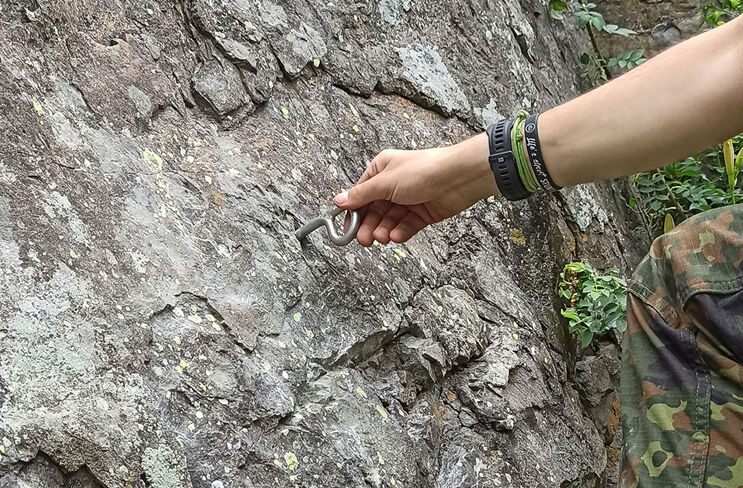
Etwa 1980 haben Kletterer hier die ersten gebohrten Haken gesetzt, die mit einem Schnellbindezement in den Fels eingeklebt wurden. Dieser Zement ist jedoch nicht witterungsbeständig. Daher haben sich nun nach circa 45 Jahren einzelne Haken gelockert. Um die Sicherheit für die Kletternden wiederherzustellen, sanierte die JDAV in einer großen Aktion das gesamte Gebiet mit über 300 Zwischenhaken und 50 Umlenkern, allesamt aus Edelstahl. Eine Herausforderung bestand dabei in der unterschiedlichen Beschaffenheit des Verankerungsgrunds. So haben die Haken für die Zwischensicherungen eine Länge von 80 mm. Die Umlenkhaken sind dahingegen 120 mm lang. In dem Gestein, das oben am Felskopf schlechter ist, wird mit der größeren Verankerungstiefe mehr Sicherheit geschaffen. Die Umlenker dienen als Kettenstände mit Ring oder gar Karabiner am Ende der Route dazu, das Seil umzuleiten und den Kletterer wieder abzulassen. „Beim Klettern entscheidet jeder einzelne Haken und Befestigungspunkt über die Sicherheit der Menschen“, betont Fynn Renner, Leiter der Fortbildung von Jugendleiterinnen und Jugendleitern bei der Jugend des Deutschen Alpenvereins (JDAV) Konstanz. „Wir, vom JDAV, vertrauen daher auf die Qualität und Zuverlässigkeit bewährter fischer Befestigungsprodukte.“
Beim Klettern entscheidet jeder einzelne Haken und Befestigungspunkt über die Sicherheit der Menschen. Wir, vom JDAV, vertrauen daher auf die Qualität und Zuverlässigkeit bewährter fischer Befestigungsprodukte.
Bei der Sanierung des Klettergartens Mägdeberg verwendeten die Kletterer Verbundhaken, die zusammen mit dem fischer 2-Komponenten-Injektionsmörtel FIS V Plus einen Form- und Stoffschluss mit dem Fels bilden. „Die Befestigungsmethode garantiert sicheren Halt“, sagt Fynn Renner. „Denn das Verbundsystem ist fest mit der Felswand verbunden.“
Besonders sicher beim Befestigen unter extremen Bedingungen, wie beim Sichern von Kletterhaken in hohen und steilen Bergen: Der fischer Injektionsmörtel FIS V Plus lässt sich einfach und schnell verarbeiten. Wichtig beim Einsatz: Die gründliche Bohrlochreinigung, damit die verbauten chemischen Dübel ihre vollen Tragfähigkeiten erreichen. Die JDAV-Kletterer injizierten den Universalmörtel mithilfe des zugehörigen fischer Auspressgeräts kräfteschonend und schnell vom Bohrlochgrund her, drehten darin die Haken ein und verstrichen ausquellenden Restmörtel. Beim Auspressen im Statikmischer wurden in zwei getrennten Kammern gelagerten Komponenten Harz und Härter vermischt und aktiviert. Nach seiner Aushärtezeit war das Verbundsystem voll belastbar und erzielt jetzt dauerhaft hohe Tragfähigkeiten.
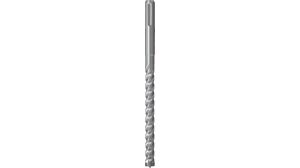
Bei der Erstellung der Bohrlöcher in dem sehr harten Gestein bewährte sich der fischer Hammerbohrer SDS Plus Quattric II. „Den fischer Quattric II Bohrer setzten wir bereits zur Sicherung zahlreicher Kletterrouten ein. Das Tool überzeugte uns beim aktuellen Sanierungsprojekt einmal mehr von seinem geringen Verschleiß und höheren Bohrleistung im Vergleich zu Alternativlösungen“, betont Fynn Renner. Dabei beschleunigen der Voll-Hartmetallkopf, massive Hauptschneidekanten und die zweiteilige Bohrwendel den Arbeitsfortschritt und erhöhen die Lebensdauer – entscheidende Vorteile bei extremen Befestigungsaufgaben. Das verstärkte Kernstück gewährleistet zudem Stabilität beim Bohren.
Nach der erfolgreich abgeschlossenen Sanierung können nun alle 50 Kletterrouten im Klettergarten Mägdeberg wieder sicher für viele Jahre beklettert werden.